PATIENT GUIDE · SEOUL
Under-eye fat repositioning in Seoul: planning your visit
· Clair Plastic Surgery
Under-eye fat repositioning is a surgical approach that redistributes selected lower-eyelid fat when fullness and adjacent hollow areas affect the contour. It is different from an injectable appointment. The decision depends on examination of the eyelids, skin and eyes, followed by a recovery and follow-up plan that fits international travel.
What does under-eye fat repositioning aim to address?
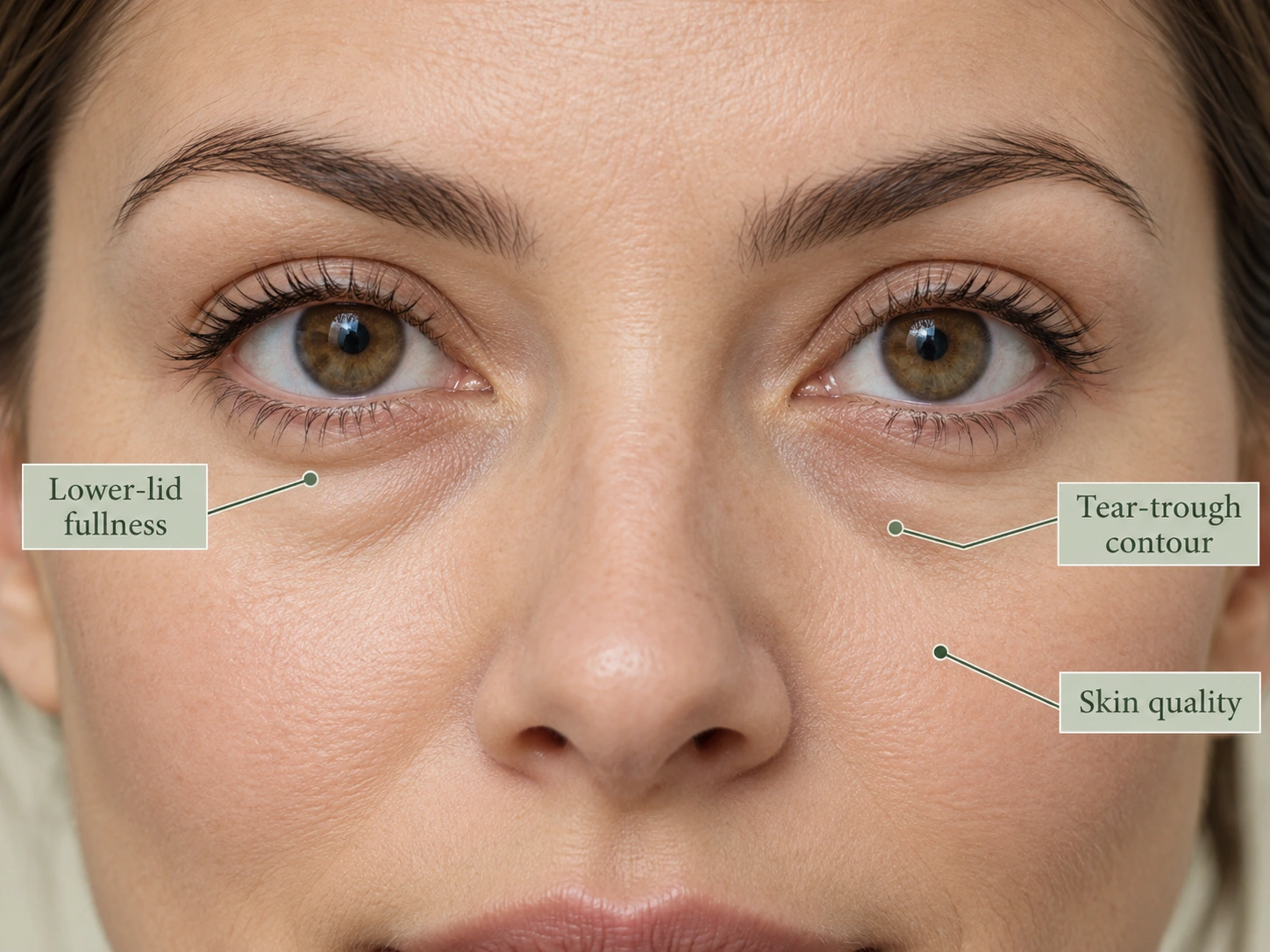
Clair's Korean procedure page describes assessing protruding lower-eyelid fat and hollow areas, with an approach through the inner eyelid in suitable cases. The page distinguishes this from an approach that also addresses loose lower-eyelid skin. These descriptions explain options for discussion; they cannot decide which operation is right from a photograph alone.
A dark-looking under-eye area is not one diagnosis. Ask what is causing your concern and which part, if any, a surgical plan is intended to address. Fat repositioning should not be presented as a guaranteed solution for every dark circle, wrinkle or tired-looking appearance. ASPS describes the range of eyelid-surgery concerns.
How does it differ from lower blepharoplasty or filler?
The names can overlap in everyday language, so ask the surgeon to describe the actual plan. The American Society of Plastic Surgeons explains that lower-eyelid surgery may involve removing or repositioning fat. An incision inside the lower eyelid is an alternative approach that does not remove skin; an external approach can address excess skin when indicated. Read the ASPS procedure overview.
Filler introduces a different material and is not the same operation. Neither option is automatically appropriate for every hollow or bulge. Ask whether the proposed plan includes skin treatment, supporting-tissue work, fat redistribution or other components, and why those are being considered for your anatomy.
What the consultation should cover
Explain what bothers you in normal lighting and what change you would consider worthwhile. Bring details of dry-eye symptoms, contact-lens use, previous eye or eyelid surgery, facial injections, medicines, allergies and relevant medical conditions. The surgeon may need additional eye assessment; ask what is needed before an operation can be confirmed.
Discuss anaesthesia, expected incision location, alternatives, possible asymmetry and the possibility of further treatment. Ask who performs each part of the operation and who reviews you afterwards. Do not interpret general credentials, a model image or a procedure description as a personal assessment or proof of a particular outcome.
Preparing for surgery and arriving in Seoul
Request preparation instructions before making final travel arrangements. Tell the team about prescribed medicines, supplements and smoking. Any change to medication, fasting or eye-care routines should follow the relevant clinician's instructions. Ask whether someone should accompany you, how you will return to your accommodation and what support you may need after sedation or anaesthesia.
Plan an appointment schedule that leaves room for assessment and a decision without pressure to proceed. Ask what happens if surgery is postponed and whether additional tests or a separate consultation are required. Keep copies of your medical history and the clinic's written instructions in a language you understand.
Risks: discuss both eye comfort and vision
Possible risks of eyelid surgery include bleeding, infection, swelling, bruising, dry eyes, difficulty closing the eyes, changes in sensation, asymmetry, scarring or a need for revision. Lower-eyelid position can change, including outward turning or pulling down. Temporary or permanent visual changes and very rare blindness are among the serious risks described by ASPS. This list is not exhaustive and does not give your personal probability.
Ask the surgeon which symptoms require immediate care and how to reach the surgical team. Seek prompt medical assessment for severe or unexpected pain or any new visual change rather than waiting for a routine online reply. The NHS patient guide also advises contacting the treating clinic for serious or unexpected symptoms.
Recovery and follow-up are individual
Early healing can involve swelling, bruising, irritation, dryness and discomfort. You should receive specific instructions on eye care, any prescribed medicine, activity and follow-up. ASPS recommends asking about dressings, stitch removal where relevant, resuming exercise and review appointments. Read its recovery questions.
The clinic's basic-information panel gives a general recovery reference, but this is not a guarantee of complete healing or fitness to fly. Bruising may remain visible beyond the first review. Ask when you can resume contact lenses, makeup, work and driving. Follow your own surgeon's instructions; another person's timeline or a social-media result is not a clearance for you.

Return flights and care after going home
Discuss your intended flight before booking and ask what reviews must happen in Seoul. There is no universal return-flight date in this guide. Surgery and travel create practical needs for assistance, access to care and flexible accommodation. Arrange medical advice for your own health and planned journey.
The CDC recommends planning continuity of care for medical travel. Keep a surgical record, treatment dates, aftercare instructions and contact details. Ask how records can be shared with a clinician at home and check what your insurance covers. If a complication develops after departure, seek local care promptly rather than delaying treatment until you can return to Seoul.
Price and practical questions before booking
A current personalised price is not verified for this article. Request a written quote in Korean won specifying the proposed operation, anaesthesia, any tests, taxes, planned follow-up and the arrangements if another review or revision is needed. A lower-eyelid skin procedure and fat repositioning alone may represent different plans; compare the actual scope rather than only a headline price.
Ask which appointments are included and which are provisional, how interpretation is arranged and what cancellation or postponement terms apply. Keep your own copy of the quote and consent information. These practical questions are especially useful before paying for non-refundable accommodation or travel.
Questions and answers
Will fat repositioning remove all dark circles?
No single operation addresses every cause of a dark-looking under-eye area. Ask the surgeon what is contributing to yours and which changes remain uncertain.
Does an inner-eyelid incision mean no recovery is needed?
No. An internal approach is still surgery. Swelling, bruising, eye discomfort and other complications remain possible, and follow-up is still needed.
Can I use the website's general recovery period to book my flight?
No. Confirm travel timing for your operation and health with the treating team. A general return-to-activity estimate is not individual flight clearance.
Arrange a consultation with Clair
Clair Plastic Surgery is at 10F, 107 Teheran-ro, Gangnam-gu, Seoul, near Gangnam Station Exit 12. See the location guide and Dr. JinHo Han's published introduction. Ask the clinic to confirm the clinician, consultation language and appointment availability for your dates.
Contact info@clairps.com or +82 10 7153 7591 with your questions and travel plans. This article provides general patient information from the listed sources. It does not diagnose an eye condition, give a personalised operative plan or promise a result.
Sources and further reading
Sources checked 2 November 2026. General patient information; individual advice requires a consultation. No clinician review of this article is claimed.
Explore the related treatment guide
Contact Clair Plastic Surgery · info@clairps.com · +82 10 7153 7591