PATIENT GUIDE · SEOUL
Sculptra in Seoul: consultation, risks and follow-up
· Clair Plastic Surgery
Sculptra is a poly-L-lactic acid (PLLA) injectable discussed for facial-volume and wrinkle concerns. It calls for a different conversation from an immediate contour change: ask how the clinician will assess your anatomy, review a gradual response and provide follow-up after you leave Seoul. A consultation determines whether treatment, another option or no treatment is appropriate.
What is Sculptra, and what does PLLA mean?
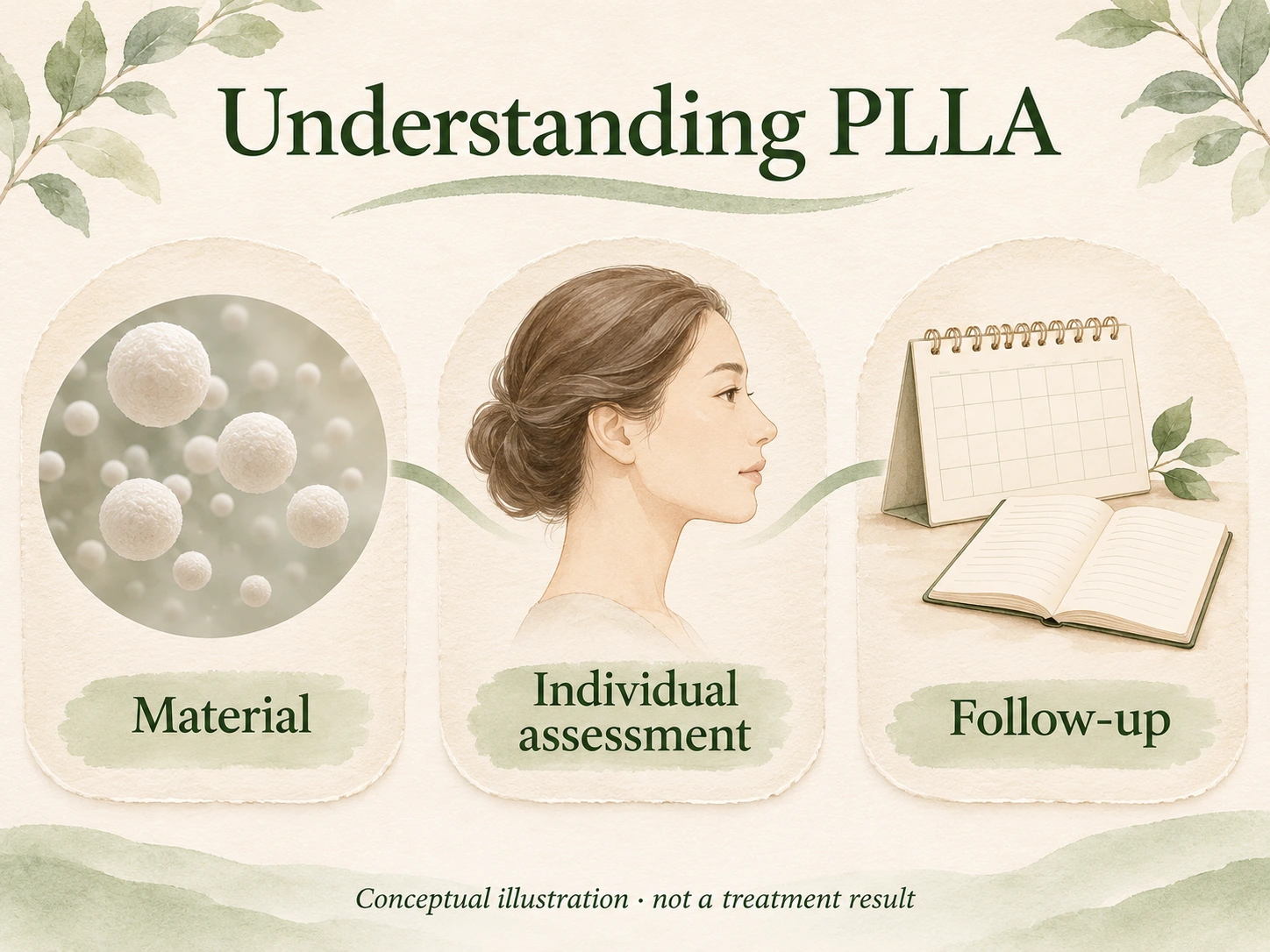
Clair’s Sculptra treatment guide identifies PLLA as the material and separates initial fullness from later tissue response. The manufacturer’s instructions for use describe an injectable implant containing PLLA microparticles, other formulation ingredients and water used during preparation. It is not simply another name for a hyaluronic-acid gel.
The clinical conversation should start with the particular concern: a crease, loss of facial volume or a different issue. Ask what the proposed treatment is expected to address and what it cannot address. Photographs on social media cannot establish your tissue condition or suitability.
The manufacturer describes a gradual response and a course of appointments. That does not establish your result, the number of sessions you need or how long any change will last. Early appearance and a later review answer different questions; ask the clinician when your own assessment should occur.
Who needs an assessment before deciding?
Every prospective patient needs an individual assessment. Bring details of earlier fillers, surgery and skin procedures, including dates and product names where available. Describe the change you hope to discuss in plain terms, and mention anything you would prefer to avoid. Ask about alternatives, including waiting or choosing no injectable treatment.
Discuss allergies, unusual scarring, previous reactions, current skin problems, pregnancy or breastfeeding, medicines and relevant health conditions. The manufacturer’s safety information lists ingredient allergy and a history of keloid or hypertrophic scarring among reasons not to use Sculptra; it also identifies groups in whom safety has not been established. These are examples, not a complete eligibility checklist. The clinician must apply the instructions relevant to the proposed product and local practice.
What should happen before and during treatment?
Before consenting, ask the clinician to explain the exact product, proposed areas, pain-management options, possible complications and review arrangements. Request enough time to understand the explanation in your preferred language. Ask whether interpretation and written English instructions can be arranged; this article does not confirm their availability for a particular appointment.
The product requires preparation and administration by a trained healthcare practitioner. This guide deliberately gives no injection depth, dilution, dose or placement map. Those decisions are clinical and cannot be transferred safely from an illustration or another person’s treatment.
A useful practical question is: “What will I receive in writing before I leave?” Request the treatment date, product identification, areas treated, aftercare and contact route. Ask which part of the proposed plan is confirmed now and which part may change following examination.
Possible side effects and urgent warning signs
The manufacturer reports swelling, soreness, redness, bruising, bleeding, itching and lumps. Some bumps or inflammatory reactions can appear later. Ask how the clinic distinguishes an expected reaction from a problem that needs examination, and how a delayed lump would be assessed.
The FDA’s general filler safety information also explains the serious risk of accidental entry into a blood vessel, which can injure tissue and cause blindness or stroke. Seek immediate medical care for unusual pain, a pale or grey-blue skin change, a change in vision or stroke-like symptoms during or after an injection. Do not wait for an overseas message reply in an emergency.
This is not an exhaustive risk list. Ask for the product’s patient information and discuss the risks at each proposed site. An advertisement saying “non-surgical” does not make an injectable risk-free.
Aftercare must be specific to the product
Sculptra aftercare should not be copied from a generic filler checklist. The manufacturer’s US patient FAQ includes a defined massage routine. Meanwhile, generic skin-injection advice may discuss avoiding rubbing. Do not resolve that difference yourself: ask for the clinician’s written, Sculptra-specific instructions, demonstrate your understanding and clarify any conflicting advice before leaving.
Ask when to use skincare or makeup, resume exercise and heat exposure, and arrange another procedure. Tell the clinician about planned dental work or other upcoming care. Do not stop a prescribed medicine on your own to fit an appointment. The individual plan and treating clinicians should resolve medication and scheduling questions.
Planning follow-up before returning home
A short holiday may not accommodate every proposed review or further session. Before booking non-refundable travel, ask which checks need to happen in person and what can reasonably be discussed remotely. There is no universal “safe flight day” or guaranteed recovery period in this guide.
The CDC’s medical-tourism guidance recommends planning ongoing care, retaining English medical records and seeking prompt assessment for suspected complications. Keep a copy you can show a clinician at home. Clarify the clinic’s contact hours, the emergency route in Korea and who will assess you after you return.
Budget time for an unplanned review. A practical itinerary puts the consultation and confirmed follow-up requirements before optional sightseeing. Ask how the plan would change if treatment is postponed or an unexpected reaction occurs.

Price, availability and a useful enquiry
A current individual price and appointment availability have not been confirmed for this guide. Request a written quote in Korean won, identifying the proposed product, whether tax is included, the number of visits covered and charges for review or complications. Do not substitute a foreign manufacturer’s advertised price for a Seoul clinic quote.
For a first enquiry, share your travel dates, the concern you want assessed, previous procedure names if known and your preferred consultation language through the clinic’s agreed contact route. Ask which records to provide securely. You do not need to settle on a dose or purchase a course before your examination.
Questions international patients often ask
Can I judge Sculptra on the day of treatment?
The clinic describes early fullness separately from later response. Ask when the clinician intends to review your progress; treatment-day photographs cannot establish the eventual result.
Is PLLA interchangeable with hyaluronic-acid filler?
No. They are different materials. Ask why a particular product is proposed and how its follow-up and management of complications differ. Do not assume that an option used to reduce one filler will work for another material.
Can I arrange everything in a single Seoul visit?
Possibly not. Suitability and any staged treatment or review must be confirmed. Discuss the implications of returning home between appointments before paying for a package.
Where can I read about skin-focused HA injections?
Our separate hydration-injection guide explains why the treatment goal and exact formulation should be clarified. It is not a recommendation to combine the treatments.
Sources and further reading
Sources checked 4 November 2026. General information, not individual medical advice. Prepared with AI assistance and source checks; no clinician review of this article is claimed.
Explore the related treatment guide
Contact Clair Plastic Surgery · info@clairps.com · +82 10 7153 7591