PATIENT GUIDE · SEOUL
Hydration injections in Seoul: product and safety questions
· Clair Plastic Surgery
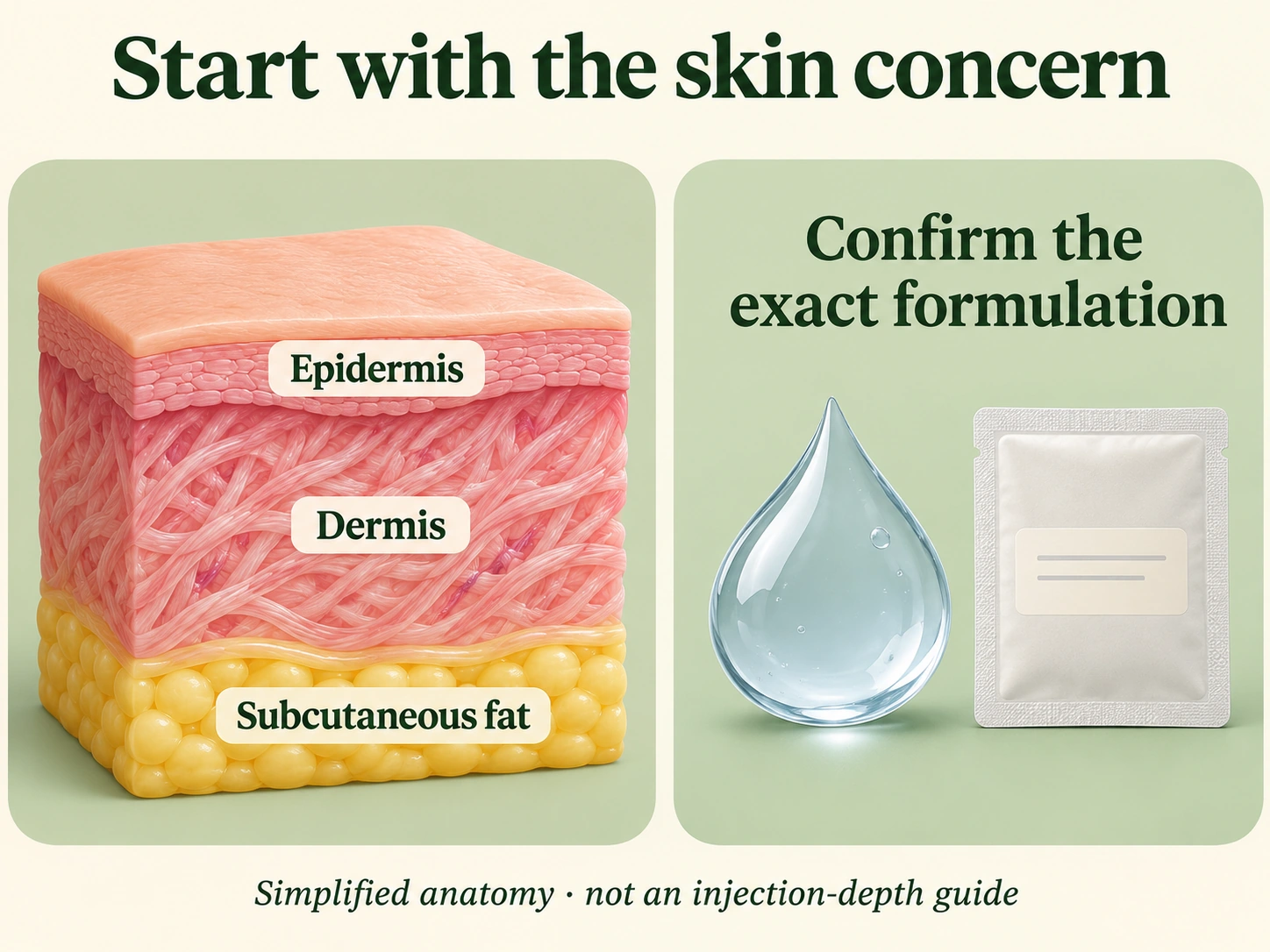
“Hydration injection” describes a treatment goal, not one standard product or protocol. Clair’s treatment list discusses hyaluronic-acid skin injections, but the exact formulation and its suitability need confirmation. For a visitor to Seoul, the most useful first step is to identify the skin concern and ask what product, evidence, risks and follow-up apply to the proposal.
What does a hydration injection mean?
Clair’s hydration-injection guide describes introducing hyaluronic acid (HA) into the skin and assessing dryness, sensitivity and formulation individually. This is a medical injection, distinct from applying a moisturiser. The description alone does not identify a brand, concentration, device or technique.
HA is a material used in different injectable products. Sharing an ingredient does not make them interchangeable. Ask whether the proposed goal is skin quality, facial volume, contour or another concern. Do not assume that a treatment called a “skin booster” is the same as a particular product reviewed elsewhere.
This article does not confirm a particular brand’s stock at Clair or promise a measured improvement in hydration, pores or elasticity. Those claims need evidence for the exact formulation, treatment area and proposed use.
Why the exact product matters
Product-specific information is more useful than a broad label. For example, the FDA maintains a separate record for SKINVIVE by JUVÉDERM, with defined US indications and patient labeling. That record is an example of product-specific evidence; it does not establish that an unnamed hydration injection has the same indication, safety profile or expected benefit.
US labeling also does not establish Korean regulatory status or determine your suitability. Ask the clinic to identify the product proposed for you, explain its local intended use and provide the relevant patient information. If the proposed product changes, ask for the explanation and quote to be updated before consenting.
Questions worth recording include the product name, ingredients relevant to allergies, proposed area, intended purpose and whether an accompanying device is involved. A brand name should be confirmed from the actual treatment plan rather than inferred from a website illustration.
What should the skin consultation cover?
Explain what you mean by dry or uncomfortable skin: when it occurs, how long it has lasted, whether the skin feels sensitive and what products or treatments you already use. The clinician needs to assess the skin rather than treat every description of “dehydration” as the same problem.
Bring a list of medicines and supplements, allergies, previous injections or procedures, and any earlier reactions. Discuss active skin problems, infection, unusual scarring, pregnancy or breastfeeding and relevant medical conditions. Ask whether the proposed product contains an anaesthetic or other ingredient that matters to your history.
Discuss alternatives and whether the concern should be investigated or managed before considering an injection. Ask how a decision to postpone treatment would affect your booking. Choosing not to have a procedure remains an option.
What might the appointment involve?
Ask how the clinician will confirm the product and treatment area, obtain consent, prepare the skin and manage discomfort. The method and any device depend on the confirmed plan. This guide gives no universal needle size, depth, injection pattern or amount.
Before treatment starts, ask what appearance or symptoms may occur afterwards and what would require review. Request written instructions in a language you understand, and confirm whether interpretation or English documentation is available for the appointment. An online enquiry can organise questions; it does not replace examination or establish a final treatment recommendation.
Risks and symptoms that need urgent attention
Redness, swelling, bruising, discomfort, irritation or infection may occur after skin injections. Some formulations can cause bumps or inflammatory reactions. The SKINVIVE patient label, for example, describes precautions involving allergies, skin conditions, medicines and other treatments. Those details must not be applied as though every HA product were identical.
The FDA’s filler-safety guidance warns that accidental entry into a blood vessel can cause tissue damage, vision loss or stroke. Unusual pain, a pale or grey-blue skin change, visual disturbance or stroke-like symptoms need immediate medical attention. Do not wait for a routine online follow-up.
Ask for a complete discussion of the proposed product’s risks, including delayed symptoms and how to obtain an assessment. This overview cannot estimate your individual chance of a complication.
Recovery, travel and continuity of care
Do not schedule treatment around a promise of no downtime. Ask which reactions are expected, how long they may take to settle and what would change the plan. Discuss makeup, skincare, exercise, heat exposure and any further procedures using the instructions for the actual product. Do not combine aftercare rules taken from different injectables.
Ask when a review is needed, whether it should be in person and how flying or a tight itinerary affects access to care. There is no universal return-flight date in this guide. Keep time available if an unexpected check is needed.
The CDC advises medical travellers to plan continuity of care, keep English medical records and seek timely medical assessment for suspected complications. Ask for your product and treatment record and agree on a contact plan before you leave Seoul. Check what your travel or health cover actually includes rather than assuming elective care and complications are covered.
Cost and a pre-booking checklist
A current price, product availability and number of sessions have not been confirmed. Ask for an itemised quote in Korean won specifying product, treatment area, any consultation or device charge, applicable tax and follow-up. An advertised price for a different formulation is not a quote for your plan.
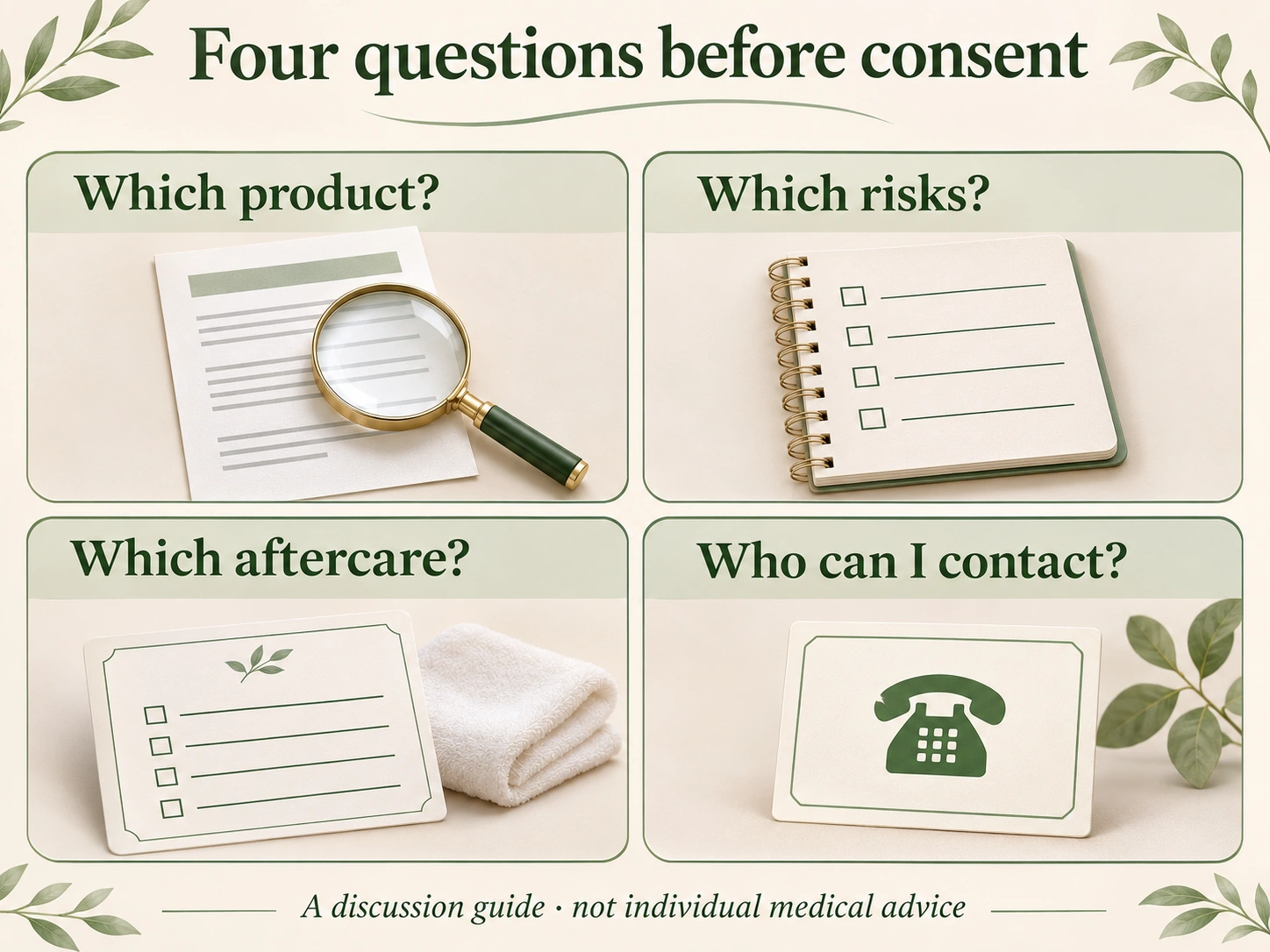
- What exact product is proposed and what concern is it intended to address?
- What evidence and local intended use apply to that product?
- What alternatives, side effects and delayed problems should I understand?
- What written aftercare and treatment records will I receive?
- Who can assess me before departure and after I return home?
Keep the answers together with your appointment details. If an answer is unclear, ask for clarification before committing to treatment.
Questions international patients often ask
Is a hydration injection the same as contour filler?
Not necessarily. Material, formulation, treatment goal and placement can differ. Ask the clinician to explain the specific proposal rather than choosing solely by the ingredient name.
Does “FDA-approved” describe every HA injection?
No. Approval relates to a specific product and use in a particular jurisdiction. Confirm the proposed product and applicable Korean information; a US example does not establish local availability or suitability.
Can I have it immediately before flying home?
The clinician must assess the plan and follow-up needs. Ask before booking the procedure, and leave room for a review if symptoms arise. No fixed safe interval is established here.
How does this differ from PLLA treatment?
PLLA and HA are different materials with different clinical discussions. Read our Sculptra consultation guide for questions about gradual assessment and product-specific aftercare. This comparison does not recommend combining procedures.
Sources and further reading
Sources checked 4 November 2026. General information, not individual medical advice. Prepared with AI assistance and source checks; no clinician review of this article is claimed.
- Clair: hydration-injection treatment guide
- Clair Korean original: hydration injections
- US FDA: SKINVIVE product-specific record, supplement S099
- US FDA: SKINVIVE patient information, product-specific example only
- NIH: skin structure, background for the simplified illustration
- US FDA: general dermal-filler risks
- CDC Yellow Book 2026: medical tourism
Explore the related treatment guide
Contact Clair Plastic Surgery · info@clairps.com · +82 10 7153 7591