

The approach, at a glance.
These consultation points summarize procedure-specific descriptions from the official Korean detail page. Suitability, technique, risks and recovery require individual clinical assessment.
Ultrasound energy
The source introduces Ultherapy as a lifting treatment using ultrasound energy.
Real-time imaging
The source discusses DeepSEE imaging to examine tissue depth and structure.
Depth-labelled tips
The source lists 1.5, 3.0 and 4.5 mm labels; these are not a depth recommendation for every individual.
Area and shot count
The FAQ explains that shot count can vary with the skin condition and treatment area.
How the approach works.
The official page describes ultrasound imaging with DeepSEE and focused energy delivery. Imaging, planned treatment zones and individual anatomy inform the procedure.
Skin surface assessment before treatment
The epidermis lies above the dermis, with subcutaneous fat deeper below.
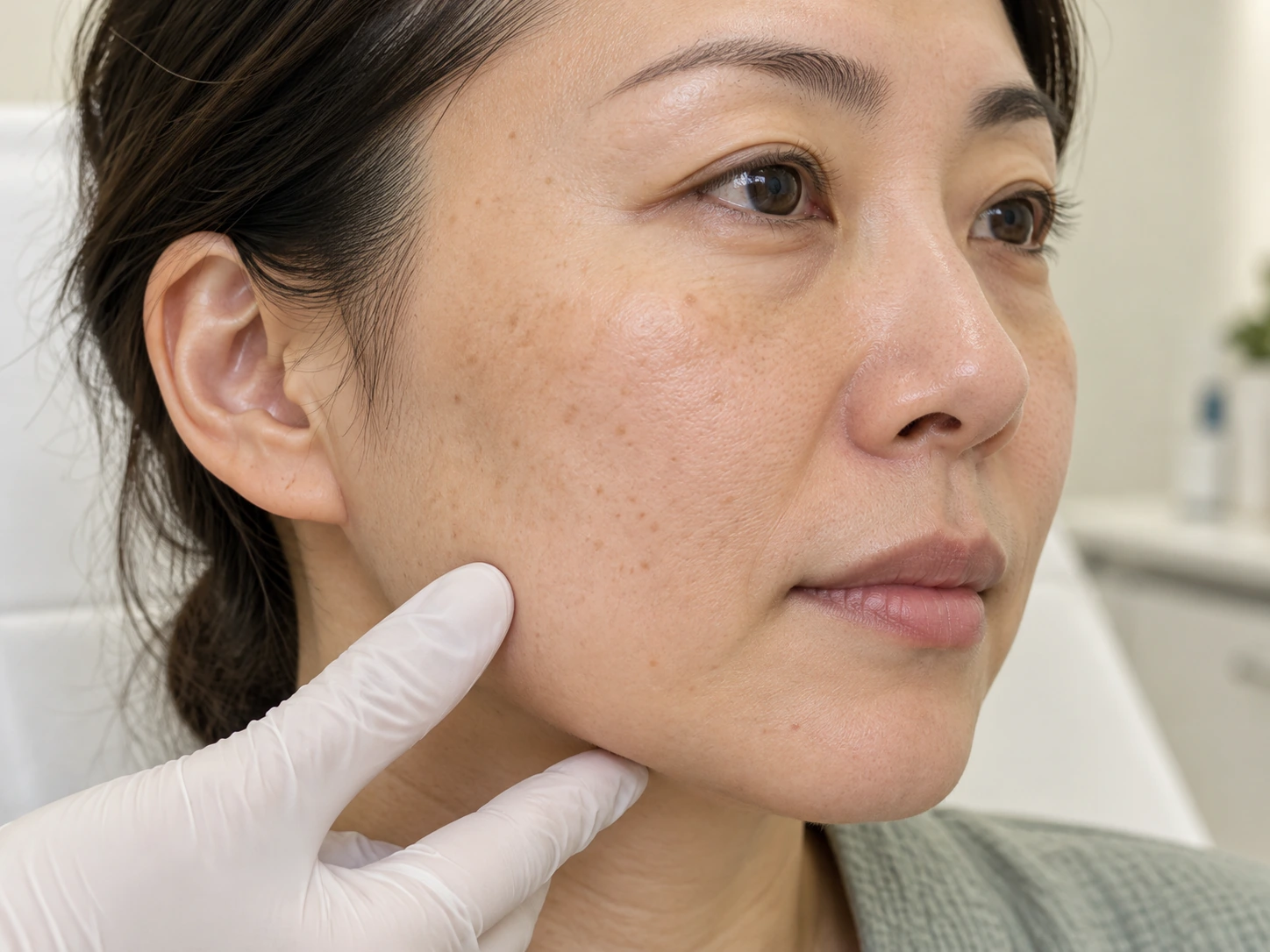
The clinician assesses skin texture before planning treatment. Epidermis, dermis and subcutaneous tissue are explained in the text rather than displayed as a cutaway.
Ultrasound handpiece and skin contact
The ultrasound handpiece contacts gel-covered skin. Different treatment heads are selected using individual anatomy and imaging; the scene does not measure treatment depth.
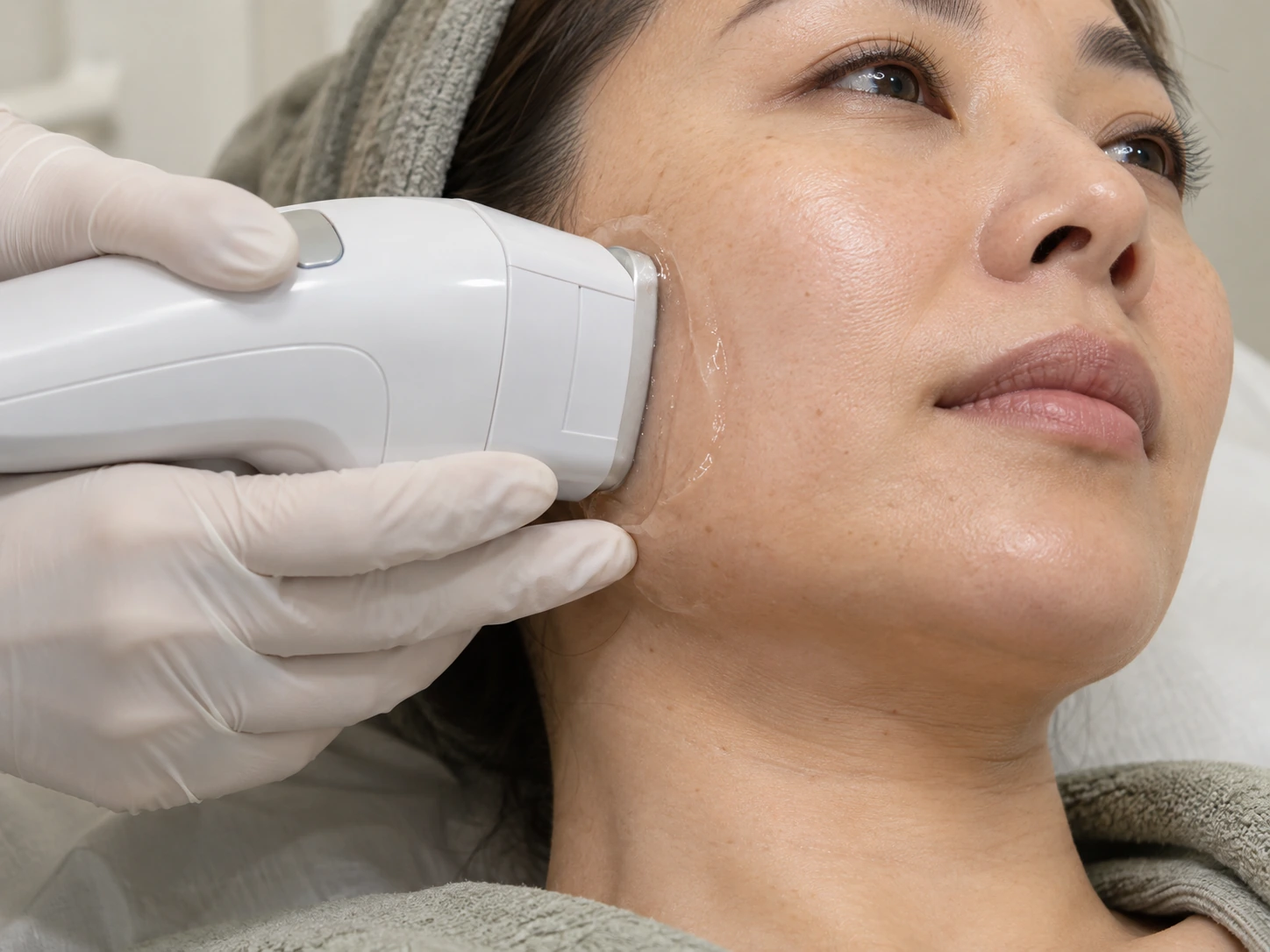
Ultrasound handpiece and skin contact The ultrasound handpiece contacts gel-covered skin. Different treatment heads are selected using individual anatomy and imaging; the scene does not measure treatment depth.
Treatment illustration; not a patient result.
Ultrasound equipment reference
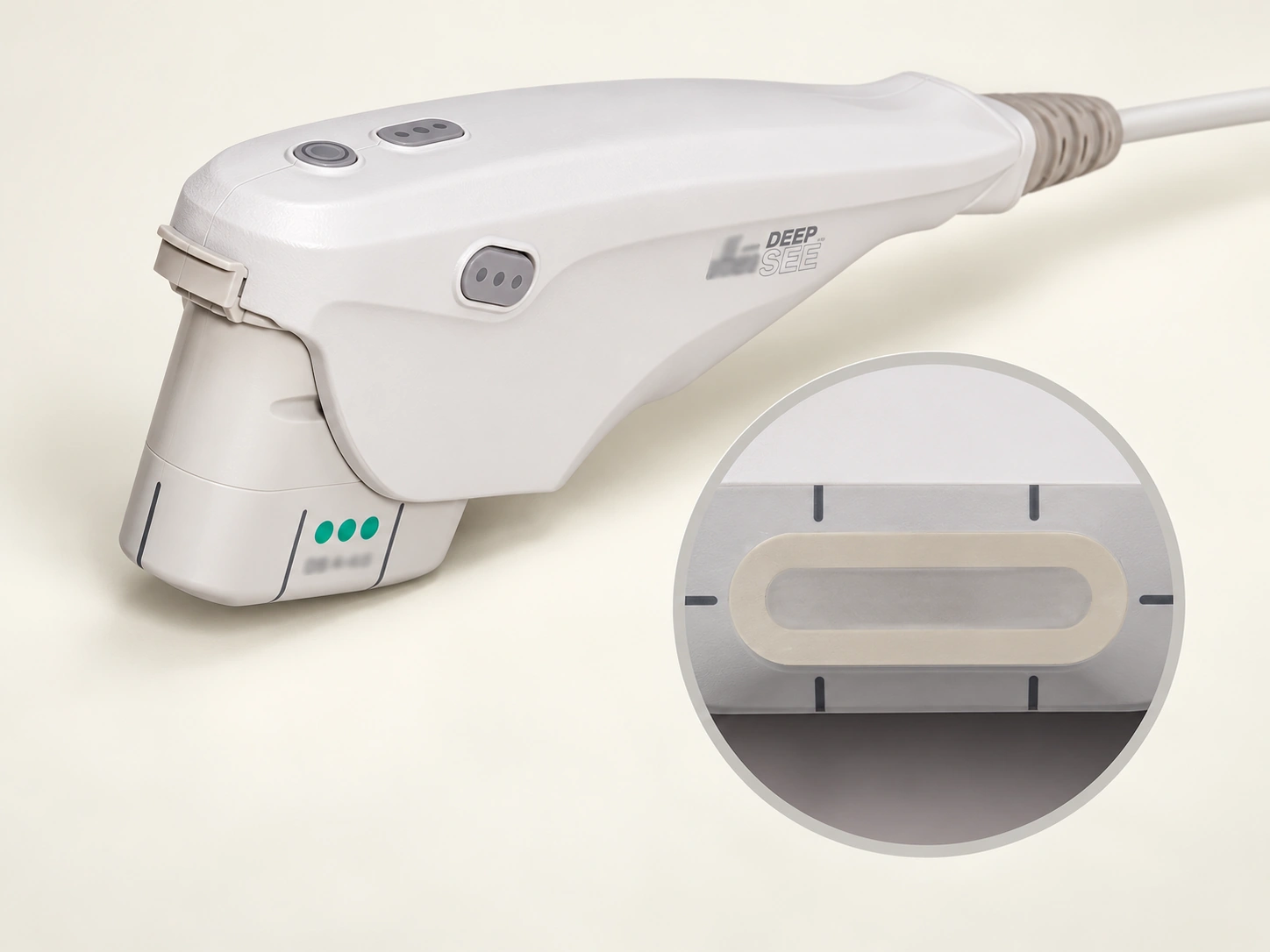
Treatment head and contact surface
Clair’s equipment image shows a treatment head and an enlarged view of its contact surface. The clinician selects the head for the planned treatment.
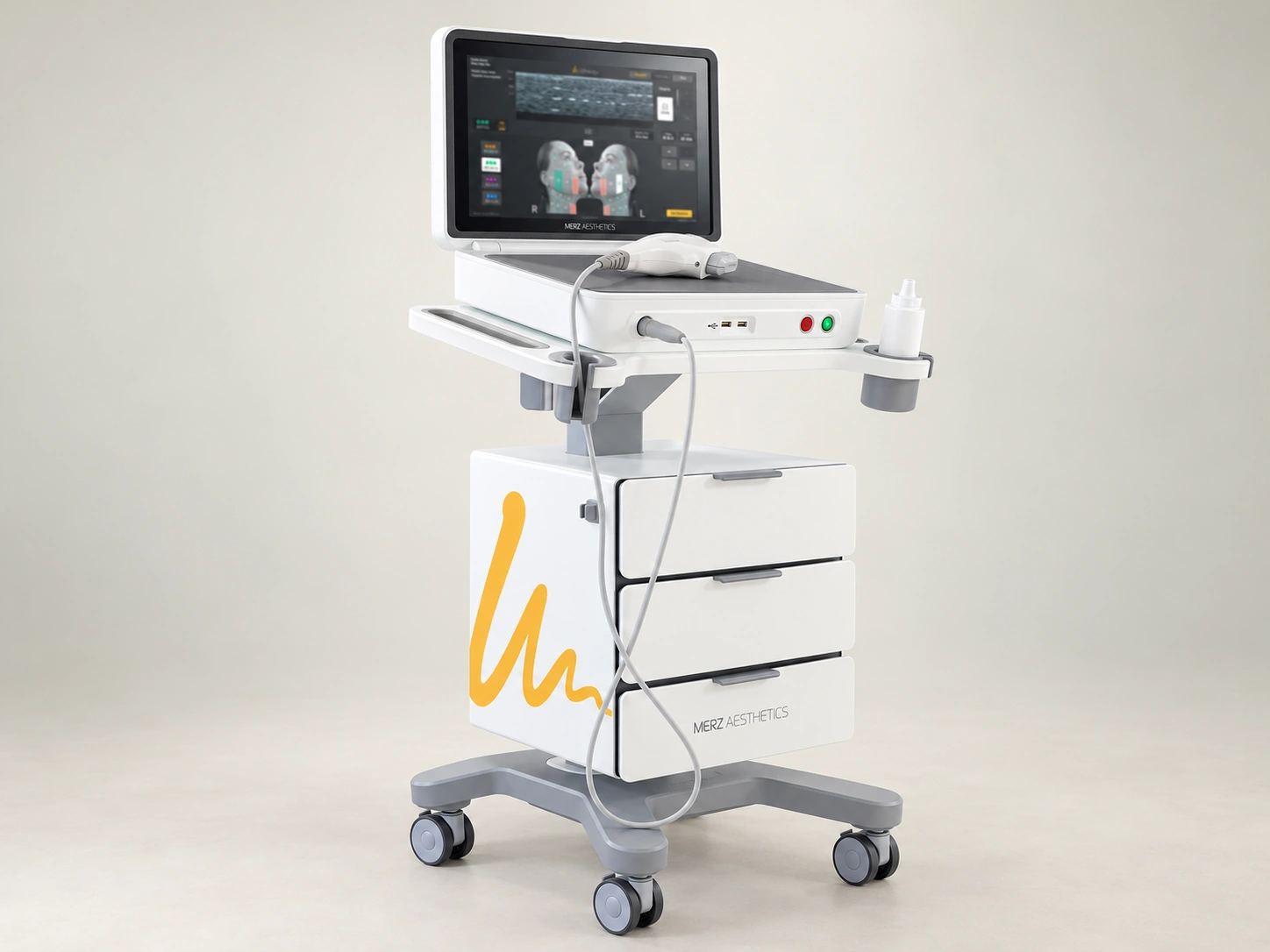
Ultherapy PRIME
Device reference. Clinic availability is unconfirmed; ask the clinic which Ultherapy platform is proposed for your treatment.
Device reference. Clinic availability is unconfirmed; ask the clinic which Ultherapy platform is proposed for your treatment.
What the consultation considers.
Tissue layers
Facial laxity
Imaging-based planning
This is a starting point for a consultation, not an individual treatment recommendation.
Microfocused ultrasound contact context
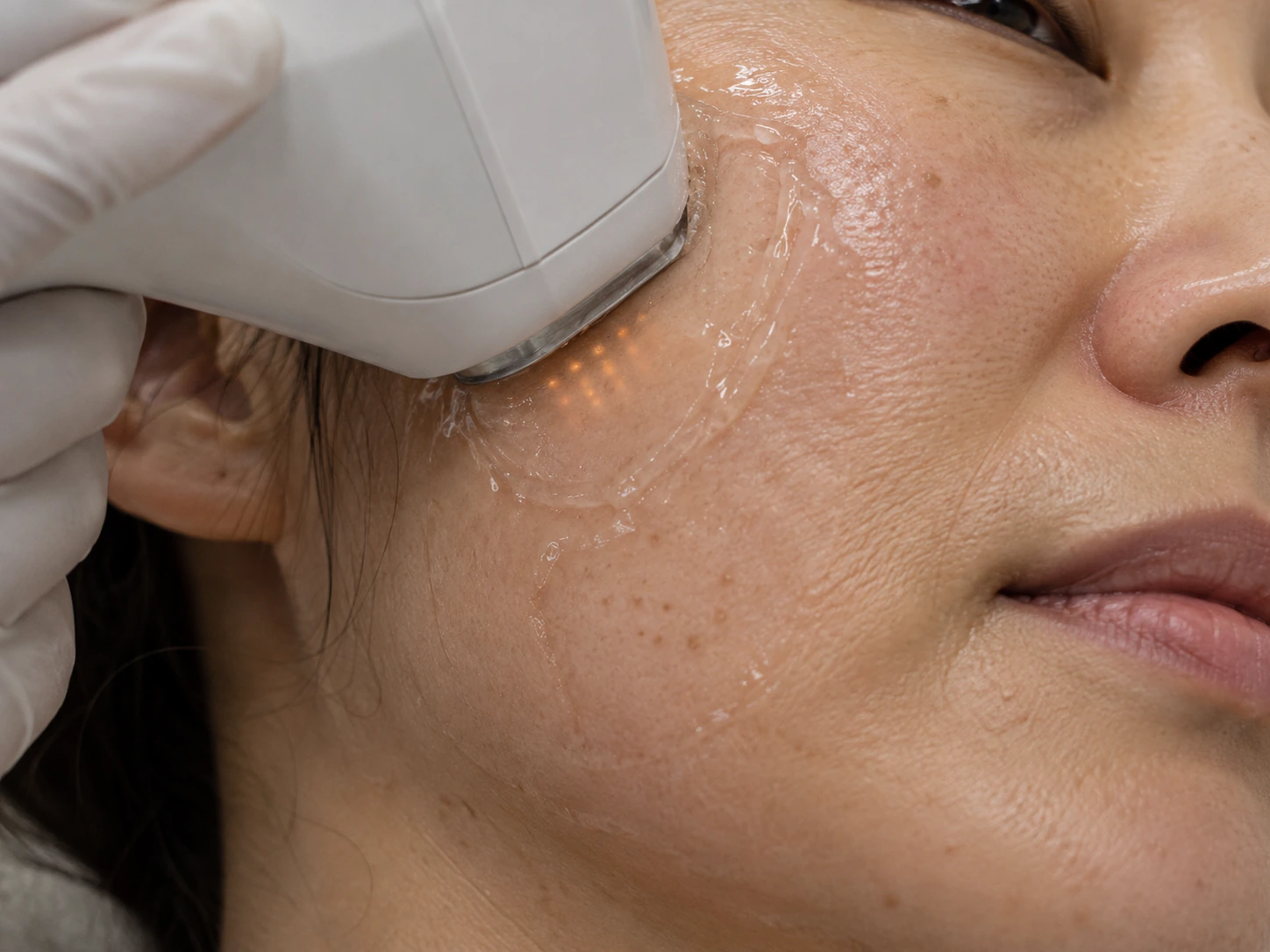
The close contact scene introduces microfocused ultrasound. The small internal visualization represents localized focus points without specifying an individual treatment depth.
Recovery, risks & limits.
Some reactions can be temporary; complications can also require treatment. This is not an exhaustive list.
Redness, swelling, pain and temporary nerve effects have been reported.
Bruising, tenderness, numbness or tingling can occur. Burns and scarring are also possible.
Ask about contraindications and the instructions for the exact system and treatment area proposed for you.
Your timeline is individual.
Procedure time, anaesthesia, follow-up and return travel depend on your examination and the final plan. Confirm them before paying for flights or accommodation.
Recovery and results vary. Your clinician should explain the procedure-specific risks and aftercare before you decide.
If you develop severe or worsening symptoms after treatment, seek medical attention rather than waiting for an online reply.
Your questions, answered.
Can an energy treatment replace any operation?
No. The degree of skin laxity and the tissues involved matter. Ask about realistic limits and alternatives rather than assuming equivalent outcomes.
How long should I stay in Korea?
Procedure time, anaesthesia, follow-up and return travel depend on your examination and the final plan. Confirm them before paying for flights or accommodation.
Can I choose the procedure before an examination?
You can explore your options first. The final plan requires an examination, a discussion of alternatives and informed consent. Choosing no treatment is also an option.
How is the cost decided?
The clinic confirms the proposed method, treatment area and product or equipment before giving an individual quote. Ask what is included in follow-up care.
What should I disclose before treatment?
Tell the clinician about previous procedures, implants, medication, allergies and health conditions. Bring available details of earlier injections or surgery.
Areas discussed in the source
 ForeheadEye areaMalar / cheek saggingNasolabial foldsUnder-chin fullness
- Forehead
- Eye area
- Malar / cheek sagging
- Nasolabial folds
- Under-chin fullness
Region labels follow the original Korean website. Markers indicate broad assessment areas, not injection points or an individual treatment plan.
View original area guide ↗Information sources
Information checked against official websites on 30 October 2026
Official Korean sourceOfficial English sourceOfficial Traditional Chinese sourceBefore & After
Case photographs
No public case photographs are displayed here for this treatment. For relevant cases, check the official gallery or ask the clinic.
Some photographs on the official website require sign-in.