

The approach, at a glance.
These consultation points summarize procedure-specific descriptions from the official Korean detail page. Suitability, technique, risks and recovery require individual clinical assessment.
Radiofrequency energy
The source describes RF energy delivered into the dermis.
Cooling and vibration
Surface cooling and vibration are described alongside energy delivery.
Individual settings
The source discusses adjusting energy and shot count to the skin assessment.
Monitor recovery
The aftercare text advises contacting the clinic if unusual reactions persist or worsen.
Process described in the source
- 1
Tip contact
The source begins with stable contact between the tip and skin.
- 2
Cooling and vibration
Surface cooling and vibration are described as the next stage.
- 3
RF delivery
The source then describes radiofrequency heat-energy delivery.
- 4
Continued cooling
Cooling continues during the energy-delivery process in the source description.
- 5
Finishing cooling
The source ends this explanation with a final cooling phase.
This diagram follows the source’s explanation order. It is not an individual operative plan or a promised result.
How the approach works.
Clair describes radiofrequency energy delivered with surface cooling and vibration. Treatment settings and comfort measures are determined individually; discomfort and skin reactions remain possible.
Skin surface assessment before treatment
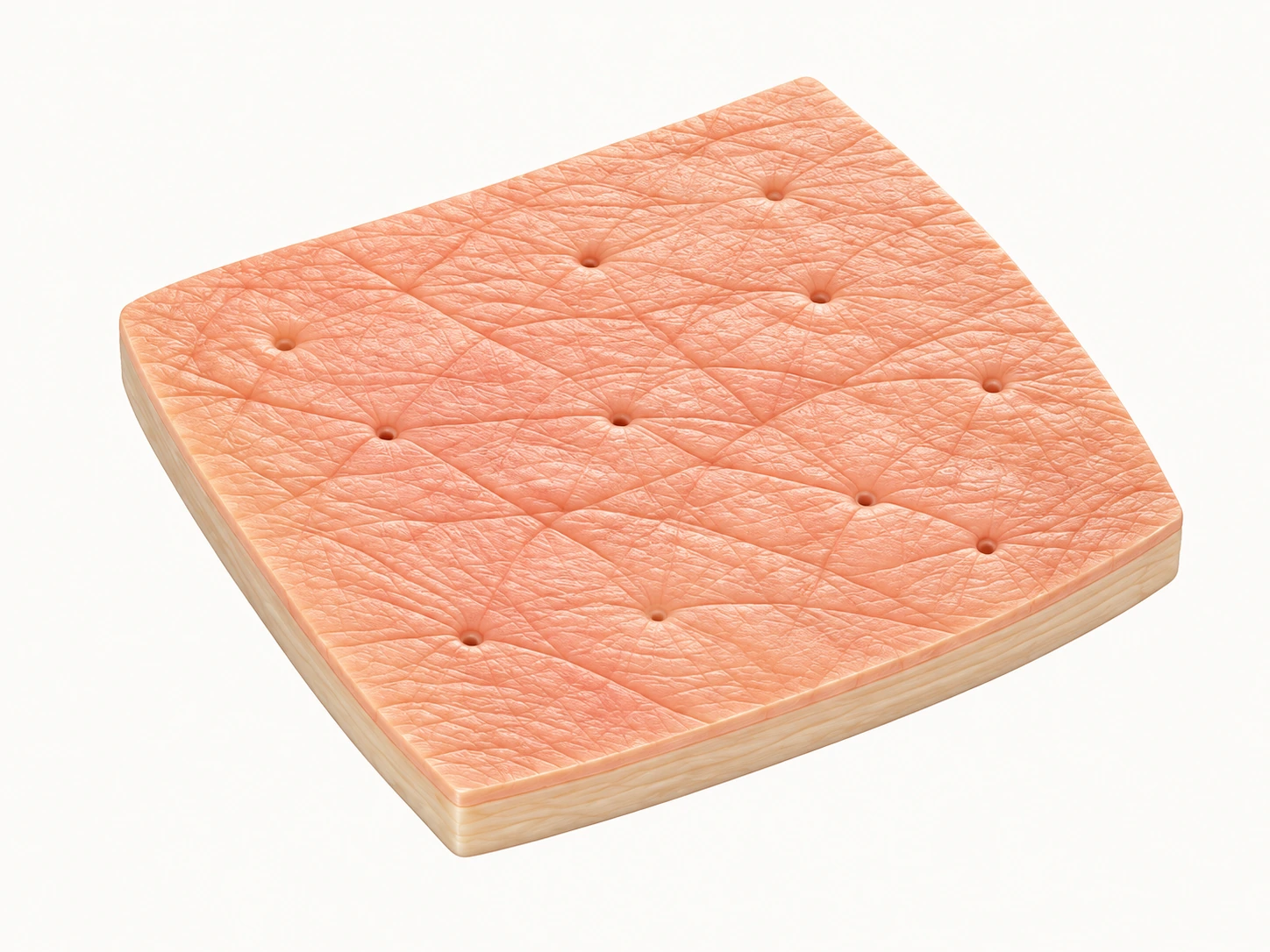
A magnified surface view shows fine skin grooves and small openings.
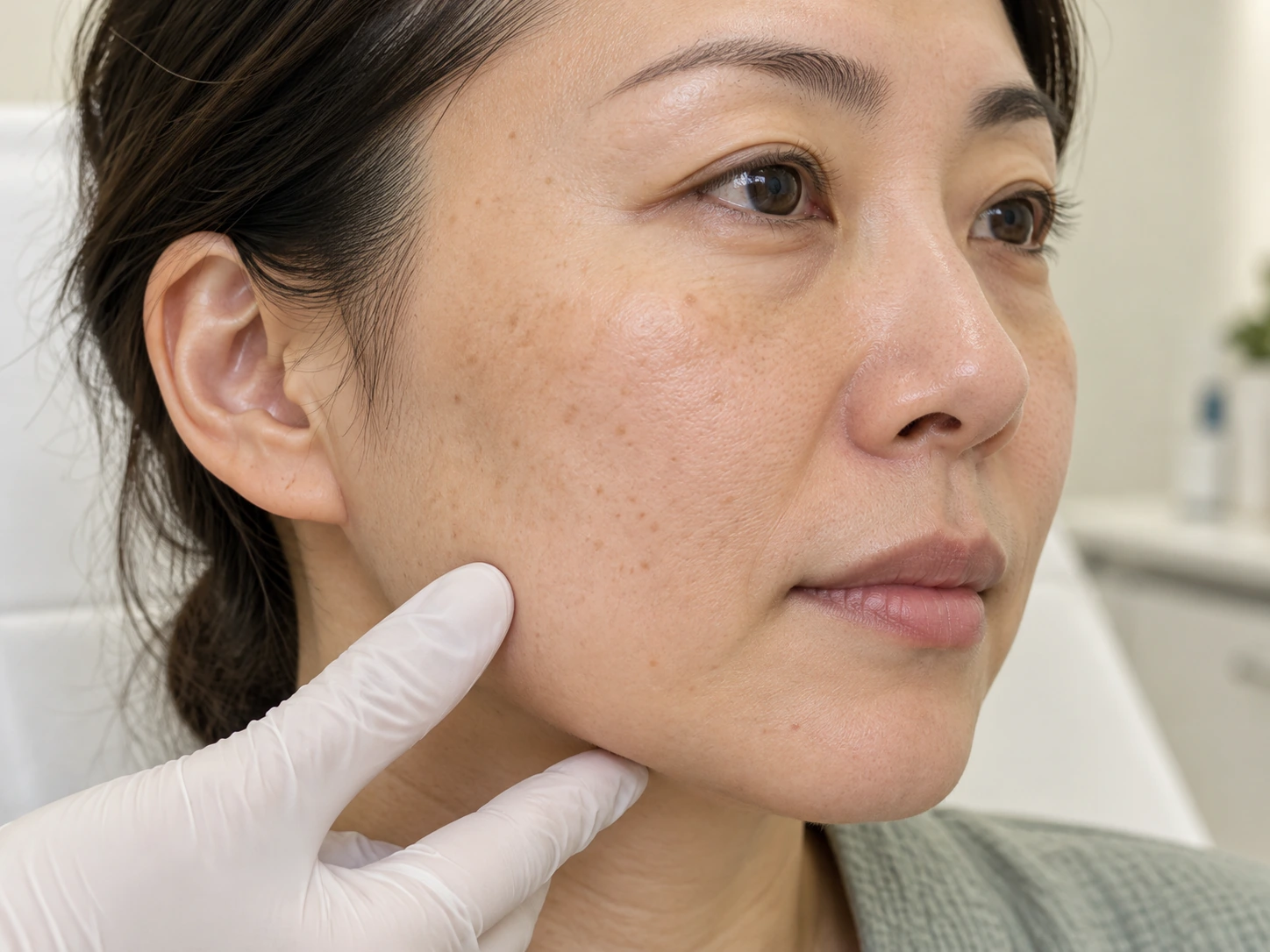
The clinician assesses skin texture before planning treatment. Epidermis, dermis and subcutaneous tissue are explained in the text rather than displayed as a cutaway.
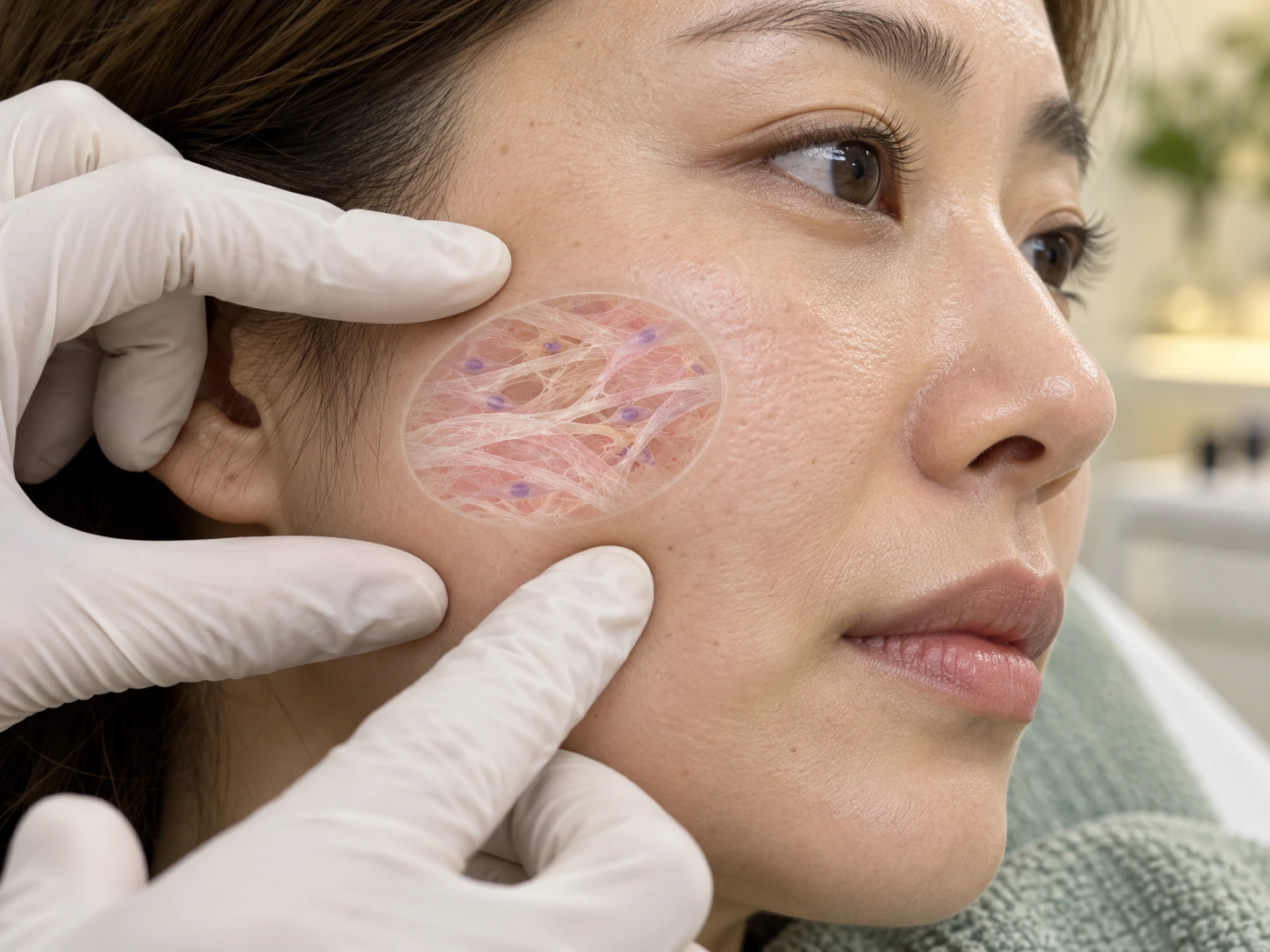
Assessment scene with a conceptual view of dermal fibers and cells. Connective tissue contributes to skin support; the inset is not a scan or a measured treatment response.
The epidermis lies above the dermis, with subcutaneous fat deeper below.
RF tip contact preparation
The RF treatment tip makes full contact with prepared skin. The clinician checks contact and the individual treatment plan.
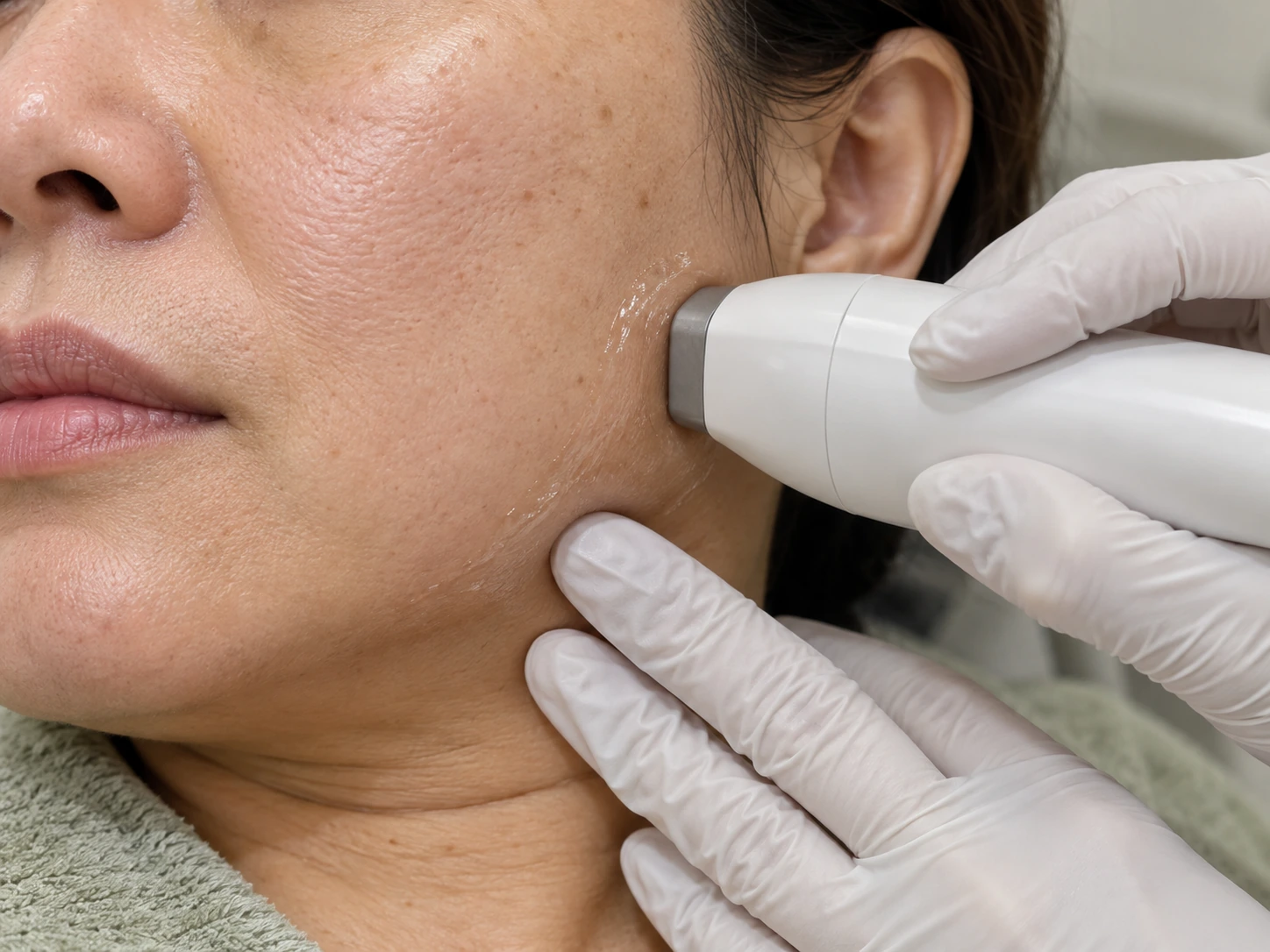
RF tip contact preparation The RF treatment tip makes full contact with prepared skin. The clinician checks contact and the individual treatment plan.
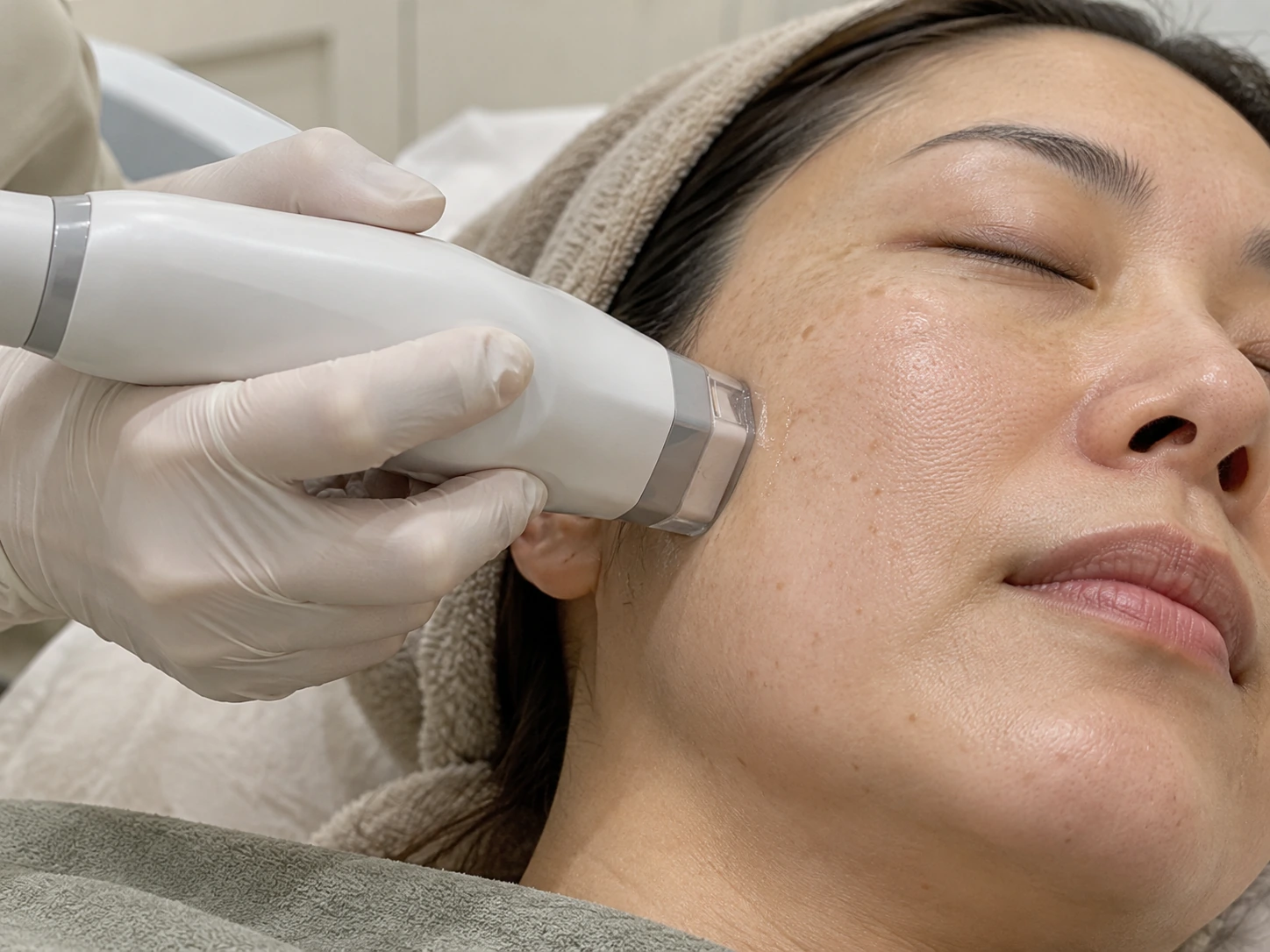
Cooling-assisted RF skin contact The handpiece combines RF delivery with integrated cooling and vibration. These functions are explained here rather than displayed as colored rays or cooling symbols.
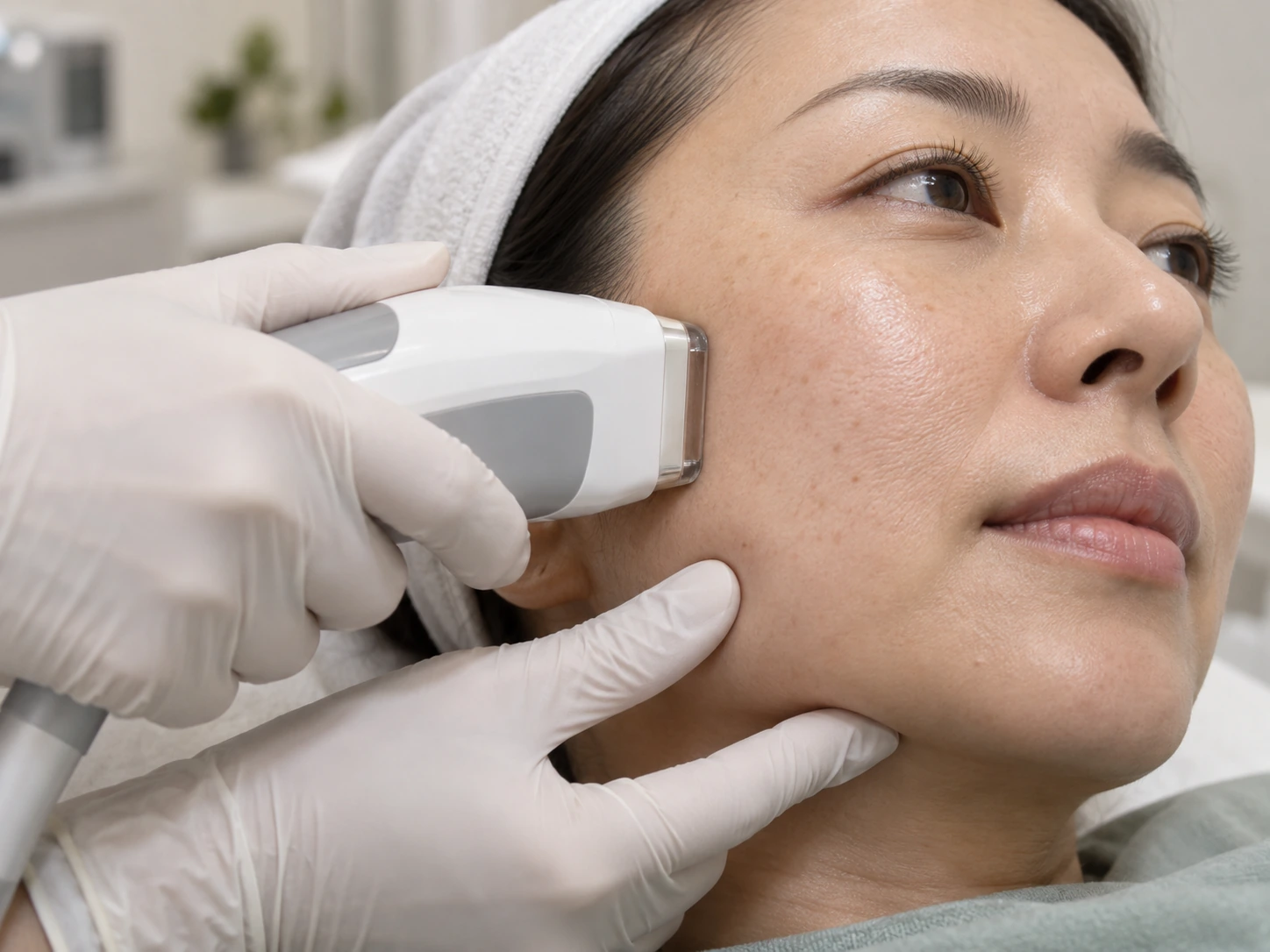
RF delivery through skin contact RF energy is delivered through the contacting tip. Heat sensation and settings are monitored individually; internal heating is not shown as a measured heat map.
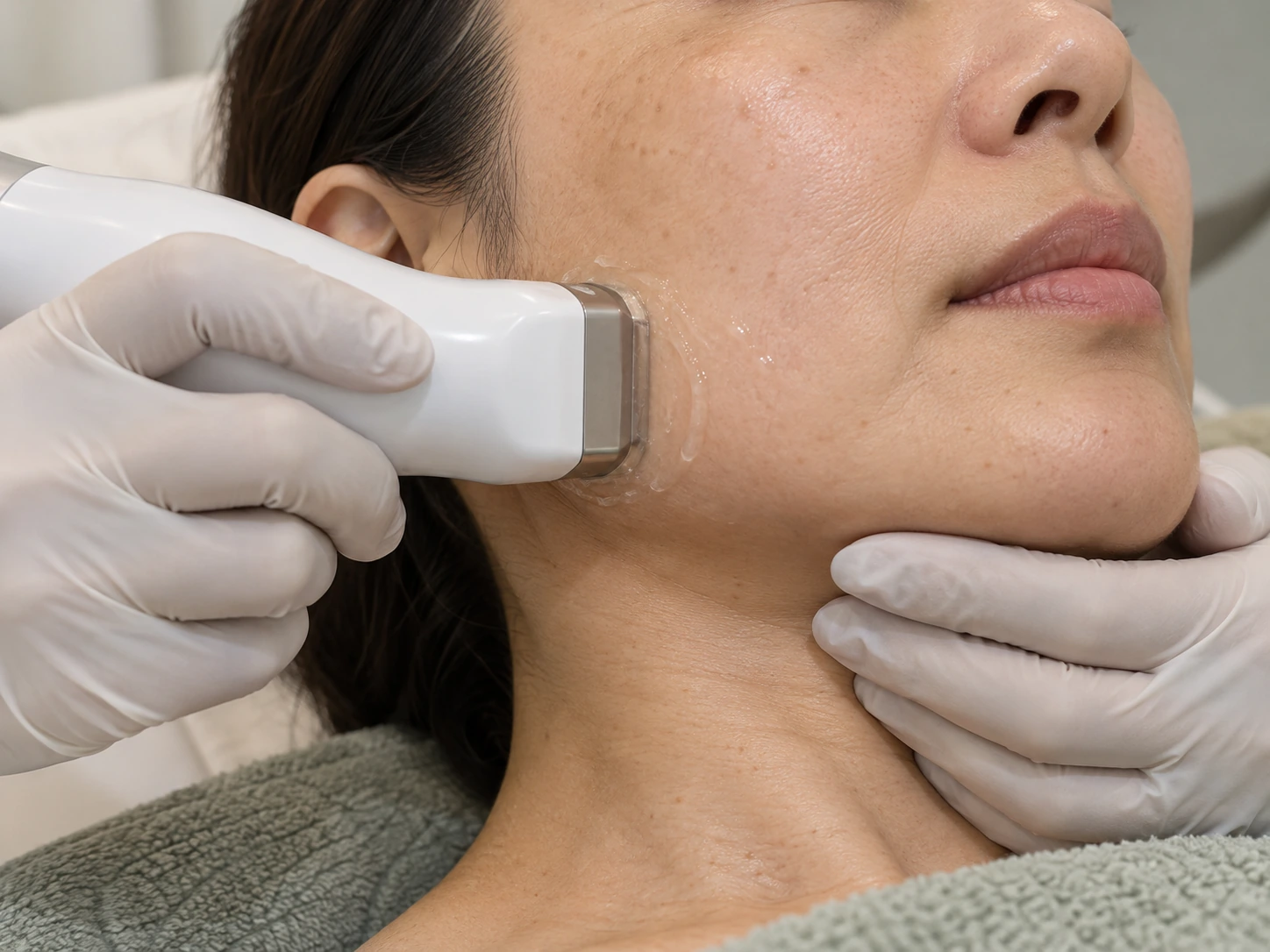
Continued contact cooling during RF Cooling continues around RF delivery while the clinician maintains skin contact and monitors comfort.
Treatment illustration; not a patient result.
What the consultation considers.
Skin firmness
Fine lines
Treatment area
This is a starting point for a consultation, not an individual treatment recommendation.
Surface RF through a contacting electrode
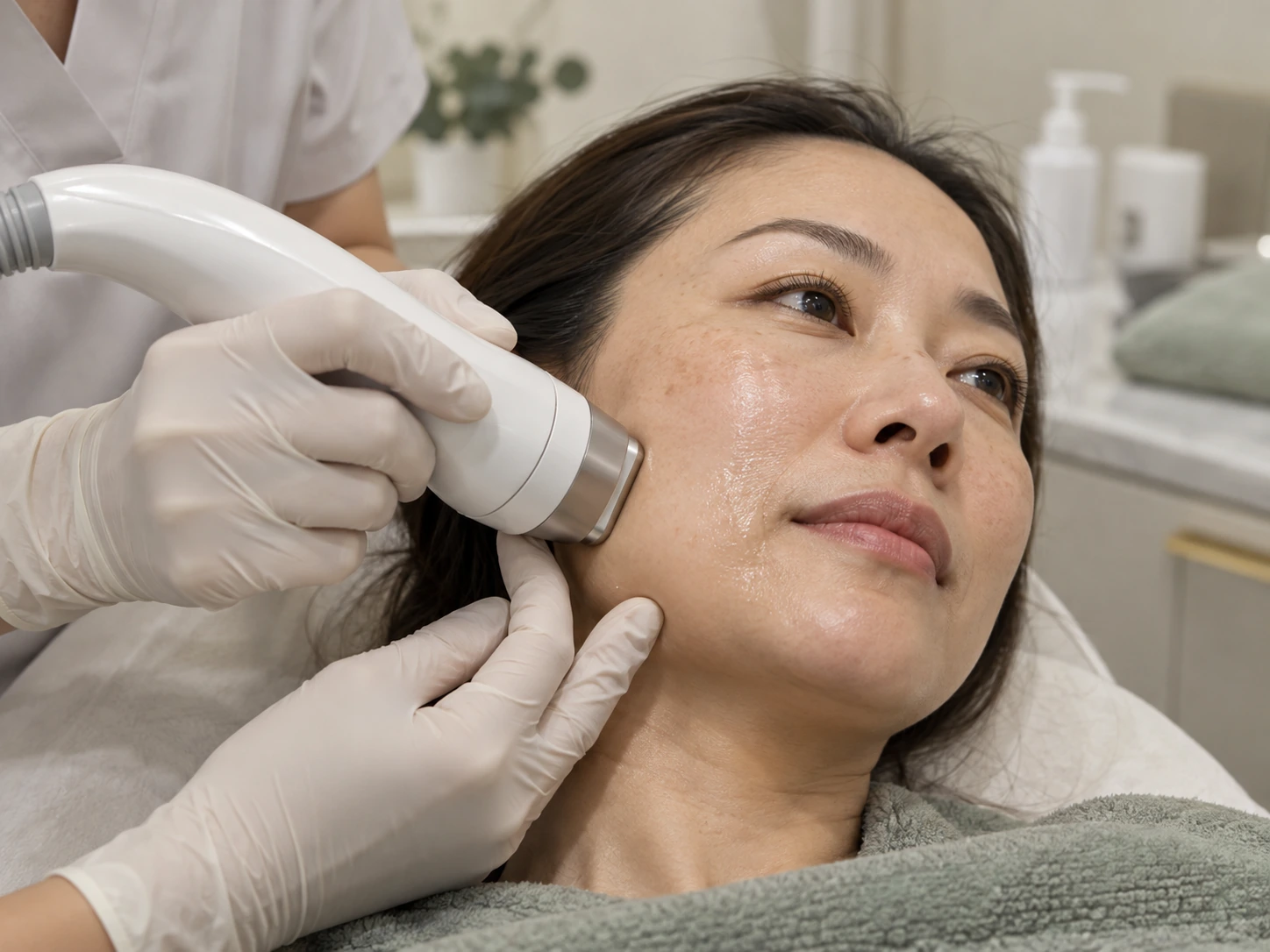
Surface RF is delivered through a contacting electrode tip. Internal heating is explained in the accompanying text rather than displayed as a measured heat map.
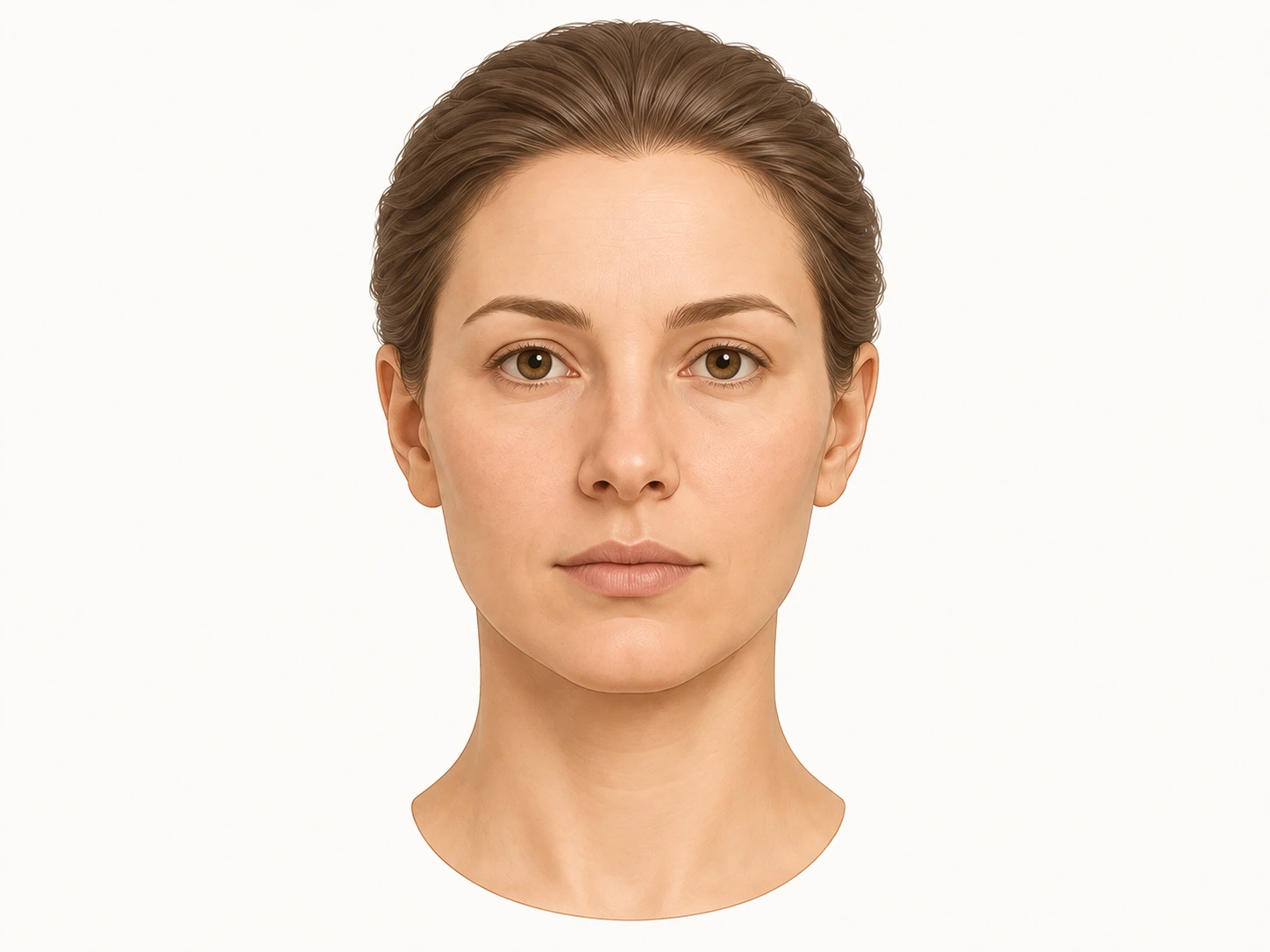
A neutral view of the same fictional teaching model, showing the eyes, nose, lips and chin.
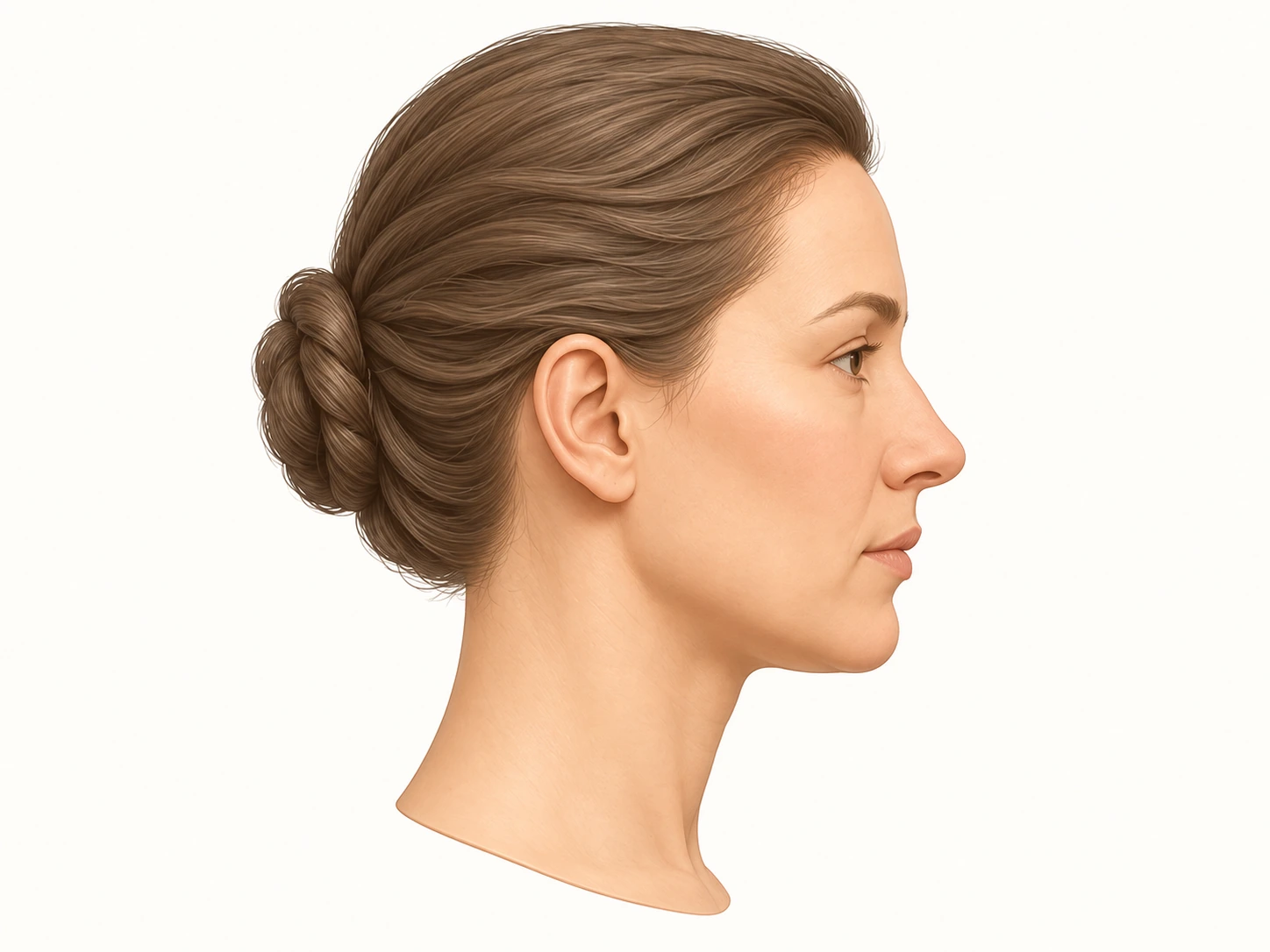
The side view shows the forehead, nose, lips, chin and jaw outline without changing the model.
Recovery, risks & limits.
Some reactions can be temporary; complications can also require treatment. This is not an exhaustive list.
Pain, redness and swelling may occur.
Less frequent reactions include burns, scars, surface irregularities, pigment changes and altered sensation.
Electrical implants are a contraindication in the manufacturer’s safety information. Discuss implants, previous fillers and medical history before treatment.
Your timeline is individual.
Procedure time, anaesthesia, follow-up and return travel depend on your examination and the final plan. Confirm them before paying for flights or accommodation.
Recovery and results vary. Your clinician should explain the procedure-specific risks and aftercare before you decide.
If you develop severe or worsening symptoms after treatment, seek medical attention rather than waiting for an online reply.
Your questions, answered.
Is Thermage the same as ultrasound lifting?
No. Thermage uses radiofrequency, while Ultherapy uses ultrasound. The energy type and target tissue differ; suitability requires an individual assessment.
How long should I stay in Korea?
Procedure time, anaesthesia, follow-up and return travel depend on your examination and the final plan. Confirm them before paying for flights or accommodation.
Can I choose the procedure before an examination?
You can explore your options first. The final plan requires an examination, a discussion of alternatives and informed consent. Choosing no treatment is also an option.
How is the cost decided?
The clinic confirms the proposed method, treatment area and product or equipment before giving an individual quote. Ask what is included in follow-up care.
What should I disclose before treatment?
Tell the clinician about previous procedures, implants, medication, allergies and health conditions. Bring available details of earlier injections or surgery.
Areas discussed in the source
 Eye areaWhole face
- Eye area
- Whole face
Region labels follow the original Korean website. Markers indicate broad assessment areas, not injection points or an individual treatment plan.
View original area guide ↗Information sources
Information checked against official websites on 30 October 2026
Official Korean sourceOfficial English sourceOfficial Traditional Chinese sourceBefore & After
Case photographs
No public case photographs are displayed here for this treatment. For relevant cases, check the official gallery or ask the clinic.
Some photographs on the official website require sign-in.